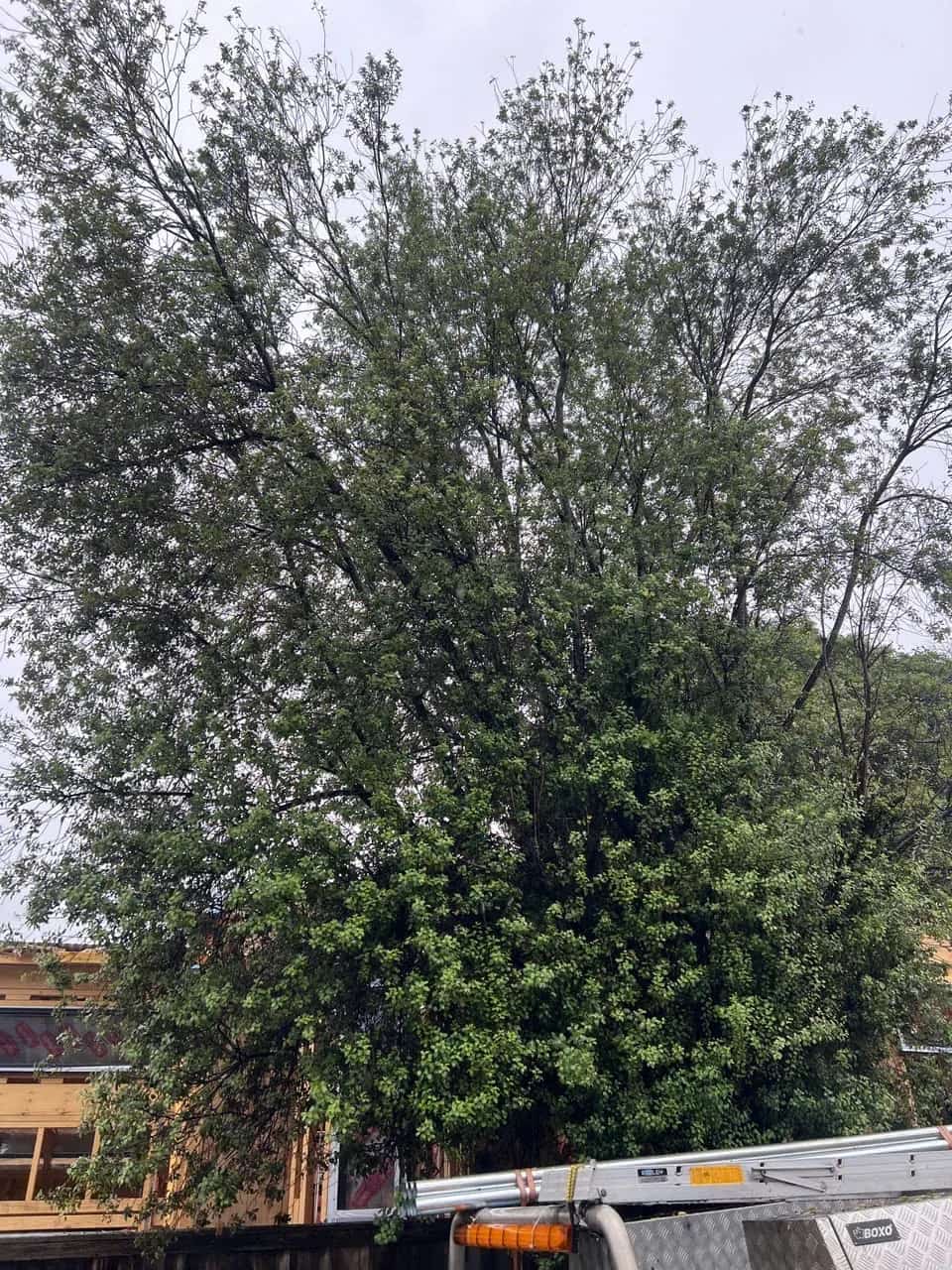
Every residential area in Whitehorse now has some tree protection. Across the whole city, a tree over 5 m tall with a canopy at least 4 m wide needs a permit to remove or lop if it's within 6 m of the front boundary or 4.5 m of the rear boundary. In the Significant Landscape Overlay areas (mostly around Blackburn, plus parts of Mitcham, Nunawading and Vermont), any tree with a single trunk 50 cm or more around at 1 m high needs a permit, wherever it is on the block.
Two tests, both apply
Whitehorse is clear that every tree must be assessed against both the overlays on your property and Clause 52.37, independently. Start by looking up your address on Whitehorse's online maps or VicPlan to see which overlays you have. Also check whether there's an old planning permit on your property: if the land was subdivided, a landscape plan may require certain trees to be kept.
Test 1: Canopy trees (Clause 52.37), citywide
A permit is needed to remove, lop or destroy a tree within 4.5 m of the rear boundary or 6 m of the front boundary that is over 5 m tall, has a canopy at least 4 m across and has a trunk over 0.5 m around at 1.4 m high.
Exempt: dead trees, emergency works to council's satisfaction, and trees on the Victorian noxious weed list.
Test 2: Overlays in your area
Significant Landscape Overlay, Schedules 1–8. These cover specific areas:
- Blackburn Area 1 and Area 2
- Walker Estate
- Blackburn Early Settlement Neighbourhood Character
- nominated large sites in Blackburn and Nunawading (Lake Road and Central Road)
- Yarran Dheran, Somers Trail, Collina Dell and Menin Road
- Vermont (Glenburnie Road and surrounds)
- Vermont (south of Canterbury Road).
In these areas a protected tree is any tree with a single trunk circumference of 50 cm or more, measured 1 m above the ground, regardless of height or position. You need a planning permit to remove, destroy or lop it, and for works within 4 m of it. You don't need one to prune it for regeneration or ornamental shaping, or to remove a tree that's dead or dying to council's satisfaction.
Significant Landscape Overlay, Schedules 11 and 12 (Gardiners Creek and Koonung Creek corridors). A permit is needed to remove vegetation unless it's under 6 m tall, with a trunk under 0.4 m in diameter at 1.4 m and a canopy under 4 m, or is a listed weed.
Vegetation Protection Overlay (VPO 1, 3 and 5). These protect specific, individually listed trees across most Whitehorse suburbs. Council publishes the list by suburb. A permit is needed to remove, destroy or lop a listed tree, with exemptions for trees that are dead, dying or unsafe to council's satisfaction.
Environmental Significance Overlay. Removing native vegetation needs a permit. Dead vegetation is only exempt if its trunk is under 40 cm in diameter at 1.3 m. Non-native trees and listed weeds are exempt.
Heritage Overlay can protect trees on some properties, and native vegetation on lots over 4,000 m² needs a permit to remove, including dead vegetation.
Pruning versus lopping
Whitehorse draws a clear line. Pruning means removing branches using approved practices for a purpose like regeneration or ornamental shaping, and is generally allowed. Lopping means cutting branches or stems between branch unions, and needs a permit in the overlay areas. In other words, "topping" a tree or cutting straight along a fence line can need a permit where proper pruning doesn't. See tree pruning and trimming.
Dead, dying or dangerous: council's definitions
| Term | Meaning |
|---|---|
| Dead | No live tissue; the tree's biological function has stopped. |
| Dying | Advanced decline that reasonable management can't fix, with a useful life expectancy under 3 years. |
| Dangerous | An imminent danger of causing damage that arboricultural management can't fix. |
The exemptions say "to the satisfaction of council", so if there's doubt, confirm with council first. See our dead tree guide.
How to apply
- Pick the application type. For one tree, and no VicSmart tree permit in the last 12 months, you can use a VicSmart application. Otherwise it's a regular planning permit.
- Download council's checklist for your situation (VicSmart one tree, SLO, or VPO).
- Prepare documents, including a copy of title and, where needed, an arborist report.
- Lodge online.
Replacement trees are often a condition of approval. Want written confirmation that you don't need a permit? Lodge a Planning Information Request (there's a fee), or call the Planning Department on 9262 6303 to discuss it.
Street trees
Street trees in Whitehorse are only removed if council's arborist finds them dead, dying or hazardous, and you shouldn't prune them yourself. Report problems to council. Our nature strip guide has the details.
How we handle Whitehorse jobs
Whitehorse is the council where the overlay check matters most, because the rules change street by street. Before quoting we look up your overlays, measure the trunk at 1 m and 1.4 m, and check the boundary distances. If a permit is needed, we tell you before you book and schedule the work once it's through.
Suburbs we cover in this council
Sources
Rules change. Always confirm with your council before work starts. We checked these sources on 6 November 2026: