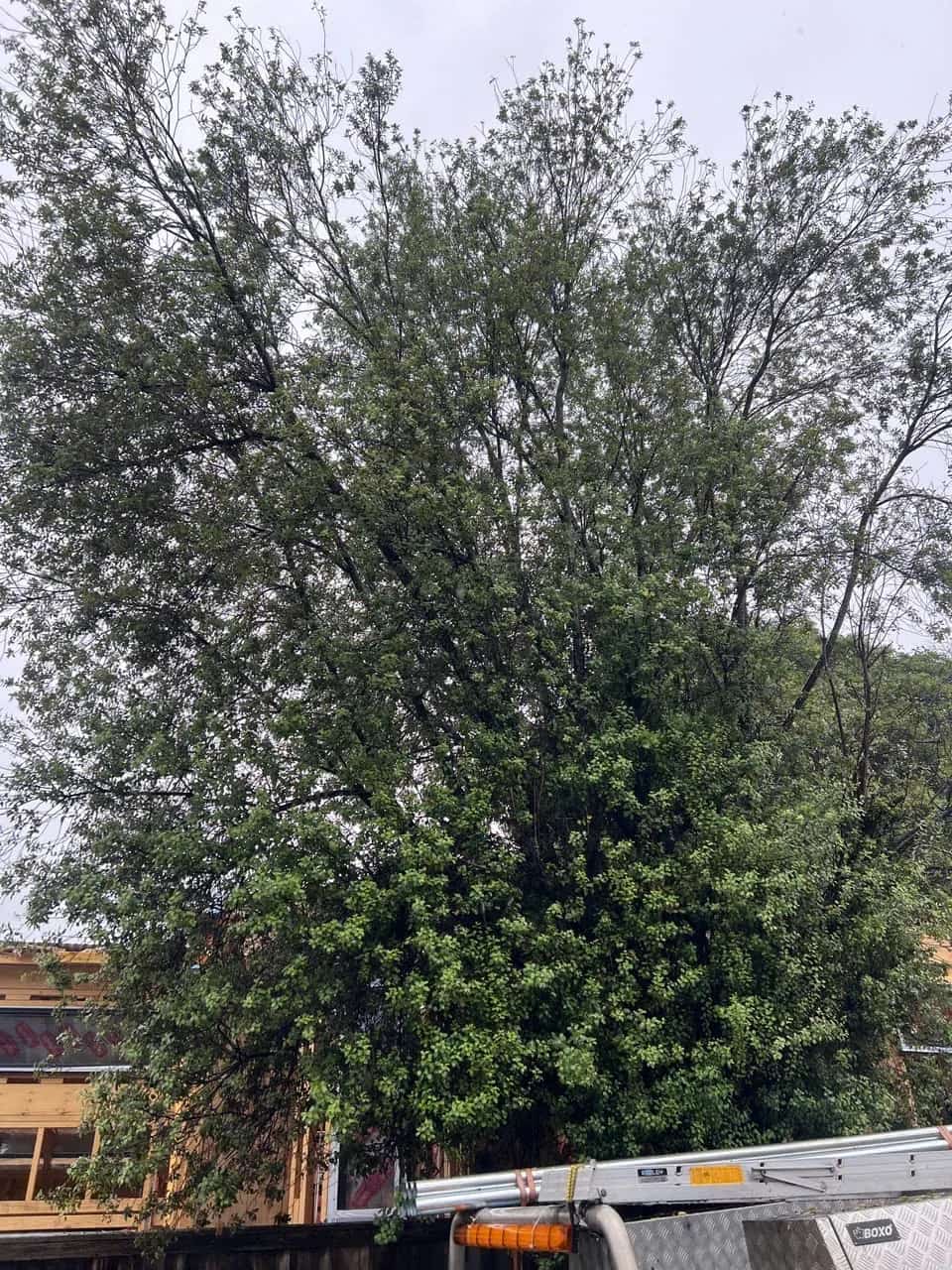
Yes, you can usually cut back branches, leaves and roots that cross onto your side of the boundary, at your own cost. This is called the right of abatement. But first check with council whether the tree is protected (you may need a permit), don't damage the tree, don't go onto their land without consent, and return the cuttings unless you agree otherwise.
The right of abatement
In Victoria, trees between neighbours are covered by general property law and common law, not a specific tree act. Under that law you can cut back anything that crosses your boundary line. The rules that come with it:
- You pay for the work, unless your neighbour agrees to share.
- You can only cut to the boundary line, from your side. You need your neighbour's consent to go onto their land.
- You're liable for any damage to the tree. Cutting so hard that the tree dies or becomes unstable can make you responsible.
- The branches and leaves are still your neighbour's property. Unless you agree otherwise, you must offer them back.
- If you're renting, talk to your property manager first. Acting without the owner's permission could breach your lease.
Check if the tree is protected first
The right of abatement doesn't override council rules. If the tree is protected, you may need a permit even to prune the overhang:
- Boroondara: canopy trees can be pruned without a permit if the work meets Australian Standard AS 4373 (Pruning of Amenity Trees). Significant trees need a permit to prune. Boroondara guide.
- Whitehorse: in the Significant Landscape Overlay areas, lopping a protected tree needs a permit, while pruning for regeneration or ornamental shaping doesn't. Whitehorse guide.
- Everywhere: lopping a boundary canopy tree can need a permit under Clause 52.37, though maintenance pruning is exempt. How Clause 52.37 works.
This is where a qualified arborist earns their fee. Cutting back to good branch unions, rather than lopping straight along the fence line, keeps the tree healthy, keeps you on the right side of the permit rules and stops it shooting back thicker. See tree pruning and trimming.
Can I make my neighbour remove or cut back their tree?
Generally no. A tree owner in Victoria has no legal duty to maintain their tree unless it's causing damage or a nuisance. To force action you'd need to win a private nuisance claim in the Magistrates' Court, and show the interference is significant and unreasonable.
Some things courts usually won't treat as a nuisance:
- Leaves, bark, sticks, flowers, fruit and sap dropping as part of the tree's normal life cycle.
- A tree blocking light or views. There's no rule in Victoria that stops a neighbour planting big trees.
Council won't resolve a neighbour dispute for you, and won't cut a private tree unless it's on council land.
If their tree has damaged your property
If your neighbour's tree has damaged your fence, pipes, driveway or house, your neighbour may be liable. Check your home insurance first, then try to agree on a fix. Gather:
- an arborist's report showing the tree caused the damage
- photos of the damage
- quotes for the repairs and any tree work.
Fence damage is dealt with under the Fences Act. Other damage, like roots cracking pipes or foundations, falls under general property law.
Talking to your neighbour (and what to do if it fails)
- Start with a friendly chat, or a note in the letterbox if you don't know them.
- Bring a quote or an arborist's advice so you're discussing real options and costs. Many neighbours are happy to share the bill.
- If you can't agree, try mediation through the Dispute Settlement Centre of Victoria.
- Court is the last resort. Get independent legal advice first: it's slow and expensive.
We can quote one job that suits both sides: for example, pruning the whole tree properly with the owner's consent instead of hacking one side off. One crew, one visit, and the bill split however you agree.
Sources
Rules change. Always confirm with your council before work starts. We checked these sources on 6 November 2026: