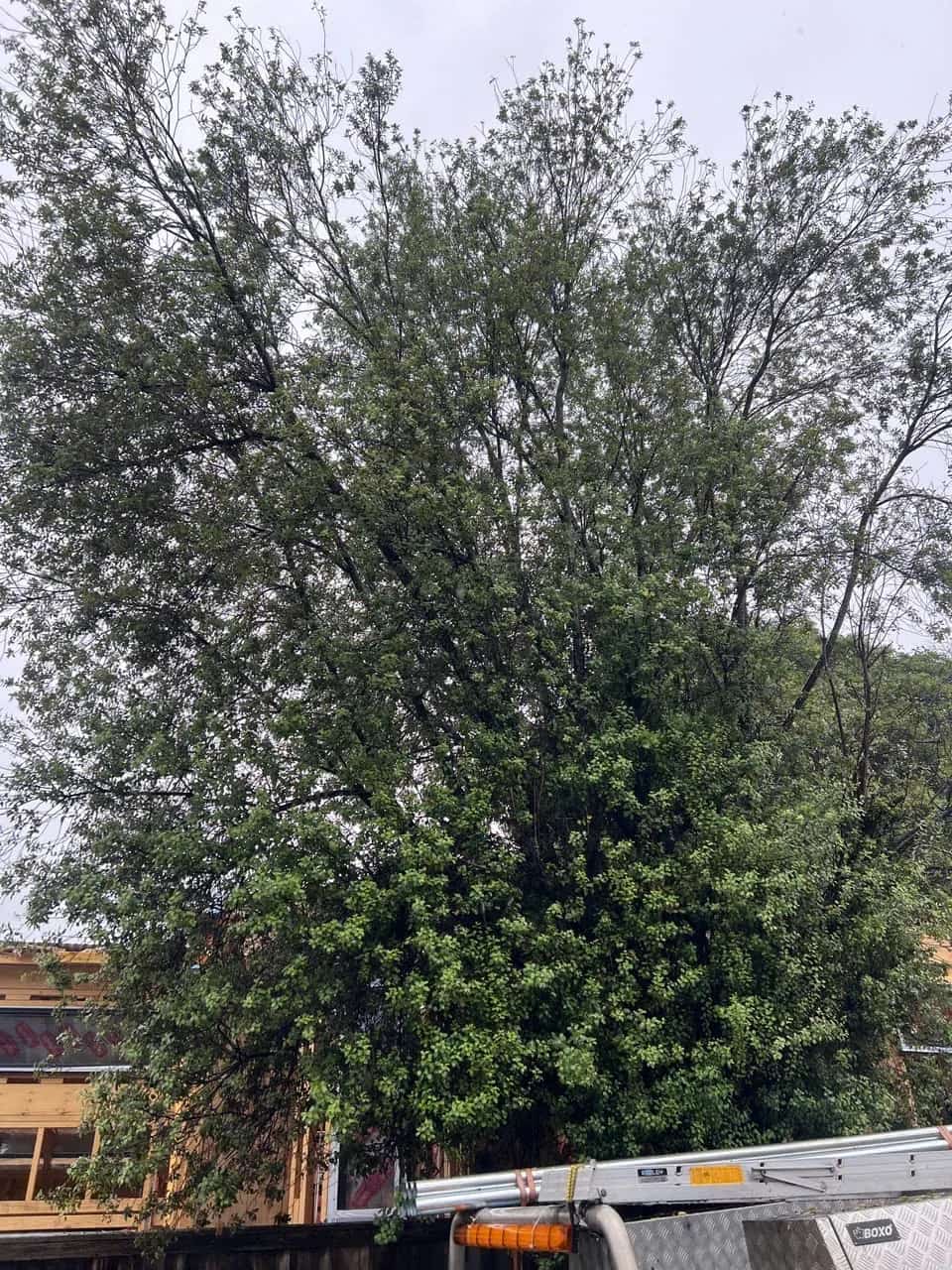
In Manningham's residential zones, you generally need a planning permit to remove a tree that's over 5 m tall, has a trunk over 0.5 m around at 1.4 m high and a canopy at least 4 m wide, if its trunk is within 6 m of the front boundary or 4.5 m of the rear boundary. Trees in the middle of the block are usually fine, unless an overlay applies. Dead trees, weeds, emergency works and maintenance pruning are exempt.
Where the rules apply
Since 15 September 2025, Clause 52.37 (Canopy Trees) applies in Manningham's General Residential, Residential Growth, Neighbourhood Residential and Mixed Use zones, even if your property has no overlays. It works alongside any overlays already on your land, such as Vegetation Protection or Environmental Significance Overlays, and the bushfire vegetation rules.
Is your tree a canopy tree?
A canopy tree has all three of:
- a height of more than 5 m
- a trunk circumference of more than 0.5 m, measured 1.4 m above the ground (about 16 cm across)
- a canopy diameter of at least 4 m.
It's a boundary canopy tree if any part of its trunk is within 6 m of the narrowest street frontage, or within 4.5 m of the rear boundary.
When you need a permit
| Your situation | Permit needed for |
|---|---|
| Existing house, no development planned | Boundary canopy trees |
| Existing house being extended | Boundary canopy trees |
| Vacant land, one new house (building permit only) | Any canopy tree on the lot |
| Planning permit application for one or more dwellings | Boundary canopy trees |
In practice, for most Manningham homeowners: a big tree in the middle of the backyard usually doesn't need a permit under this rule, but front-yard trees and trees along the back fence often do.
Exemptions
Clause 52.37 doesn't require a permit for:
- emergency and safety works
- dead trees
- pruning of trees for maintenance
- trees identified as weed species.
Council's own warning is worth repeating: one exemption "does not necessarily mean a tree doesn't require permission". An overlay on your land can still require a permit, so check before work starts. More in our dead tree guide.
Bigger blocks and bush areas
Warrandyte, Park Orchards, Donvale and parts of Templestowe have larger, bushier lots. Two more rules often apply there:
- Native vegetation on lots over 4,000 m² generally needs a permit to remove, including dead native vegetation (Clause 52.17).
- Bushfire exemptions may allow vegetation clearing around an existing house in bushfire-prone areas. Council has a vegetation removal info sheet. The conditions are specific, so check them before relying on them.
How to apply
If Clause 52.37 is the only reason you need a permit, you can apply through VicSmart, the faster planning process. You'll usually need:
- a site plan and/or photos showing the trees to be removed and the proposed replacement planting
- a cover letter explaining why you want to remove the tree, including any related building works
- an arborist's report on the tree's health or stability, if that's your reason for removing it
- a copy of the Certificate of Title from Landata no more than 3 months old, including any covenants or Section 173 agreements.
In most cases, council makes a permit conditional on planting replacement canopy trees.
How we handle Manningham jobs
Before we quote a removal in Manningham, we measure the tree and the distance from the trunk to your front and rear boundaries, because that's what decides most cases here. We also check for overlays. If a permit is needed we tell you before you book, and if a tree is clearly exempt we'll explain why.
Suburbs we cover in this council
Sources
Rules change. Always confirm with your council before work starts. We checked these sources on 6 November 2026: